Fast-growing SMEs are not only better at selling. They are usually better at managing financial discipline behind the business.
Revenue growth gets attention, but financial habits determine whether that growth becomes sustainable. Many businesses grow quickly and still struggle with cash flow, reporting delays, tax surprises, weak margins, or poor decision-making.
Growth without financial structure creates pressure. Growth with financial discipline creates control.
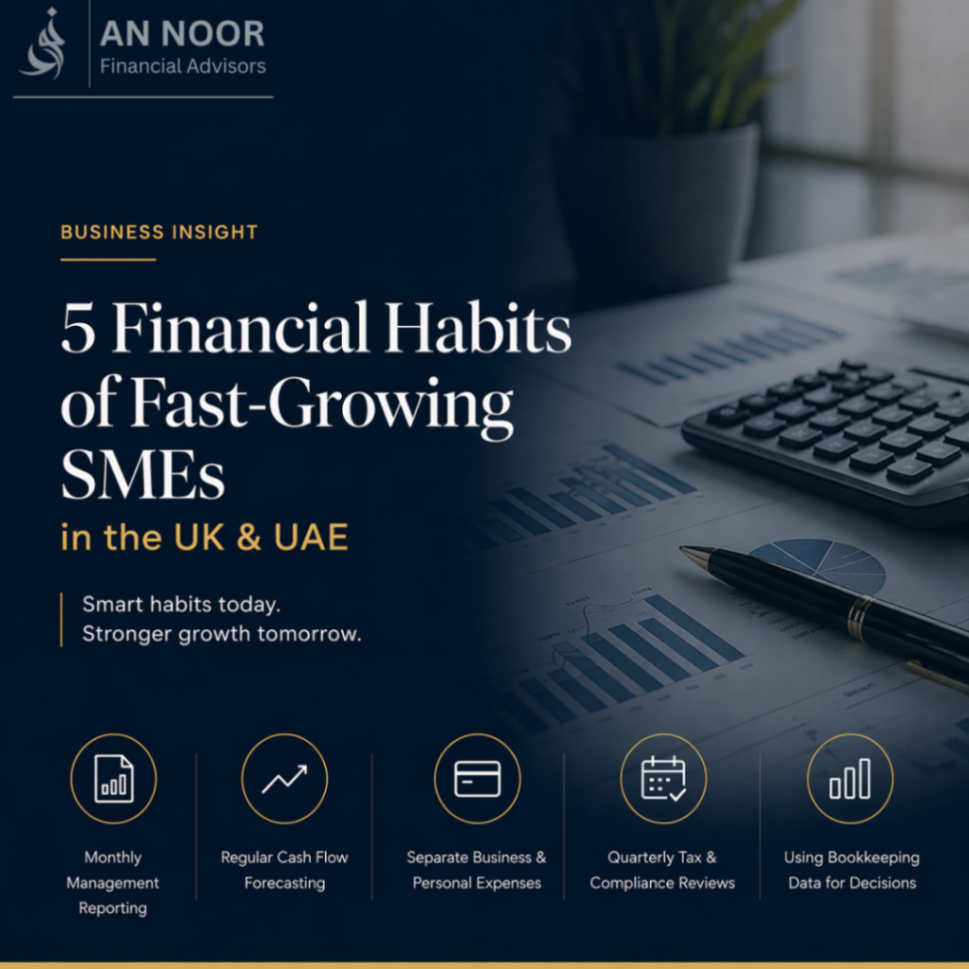
Here are five financial habits that stronger SMEs usually build early.
1. Monthly Management Reporting
Fast-growing businesses do not wait until year-end to understand performance.
They review financial results every month. This includes revenue, gross margin, operating expenses, cash flow, receivables, payables, and key performance indicators.
Monthly management reporting helps leadership identify problems early. If margins are falling, costs are increasing, or cash collection is slowing, management can respond before the issue becomes serious.
Without monthly reporting, business owners often rely on bank balance, sales activity, or instinct. That is not enough for serious growth.
2. Regular Cash Flow Forecasting
Profit and cash flow are not the same thing.
A business can show profit on paper and still face cash pressure because customers pay late, inventory consumes funds, tax liabilities build up, or expenses are due before receipts arrive.
Fast-growing SMEs forecast cash flow regularly. They look ahead at expected receipts, payments, payroll, taxes, supplier obligations, loan repayments, and planned investment.
This gives leadership confidence before making hiring, expansion, or purchasing decisions.
Cash flow forecasting is not only for businesses in trouble. It is a tool for businesses that want to grow without losing control.
3. Clean Bookkeeping and Reconciliations
Strong businesses do not treat bookkeeping as basic admin.
They understand that bookkeeping is the foundation of reporting, tax compliance, funding readiness, and management decisions.
Clean bookkeeping means transactions are recorded properly, expenses are classified correctly, bank accounts are reconciled, receivables and payables are updated, and supporting documentation is maintained.
When bookkeeping is messy, every other financial process becomes weaker. Reports become unreliable, tax filings become stressful, and management decisions become uncertain.
Fast-growing SMEs keep their books clean because they know growth magnifies financial mistakes.
4. Quarterly Tax and Compliance Reviews
Tax should not be a year-end surprise.
Fast-growing SMEs review their tax and compliance position regularly. This helps them understand expected liabilities, documentation requirements, filing deadlines, payroll obligations, VAT or sales tax exposure, and any regulatory risks.
Quarterly reviews reduce last-minute pressure and help businesses plan cash requirements.
This is especially important for SMEs operating across countries such as the UAE, UK, Pakistan, Saudi Arabia, or the United States, where tax rules, reporting obligations, and compliance expectations differ.
5. Using Financial Data for Decisions
The strongest SMEs do not prepare accounts only for filing purposes.
They use financial data to make decisions.
They review margins before pricing. They check cash flow before hiring. They analyze costs before expanding. They monitor receivables before offering more credit. They use forecasts before committing to new investment.
This is where financial advisory adds value. It helps turn bookkeeping and reporting into practical decision support.
Final Thought
Fast-growing SMEs usually have one thing in common: they build financial discipline before problems force them to.
Monthly reporting, cash flow forecasting, clean bookkeeping, compliance reviews, and advisory-led decision-making give businesses the structure to grow with control.
Growth is not just about working harder. It is about building the financial systems that allow the business to scale without losing visibility.