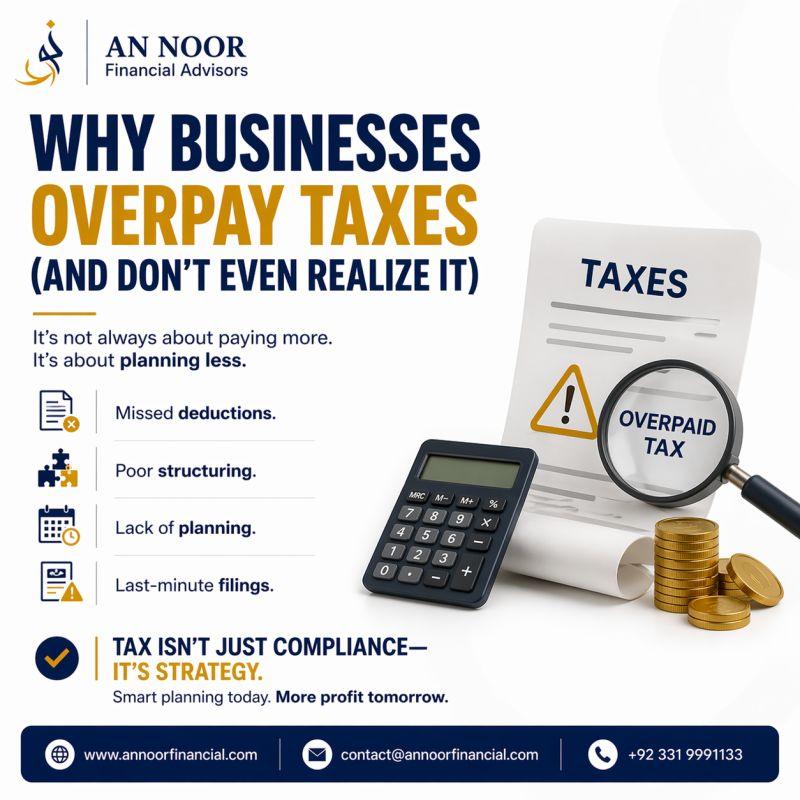
Many businesses do not realize they may be paying more tax than necessary.
Not because the tax system automatically demands it. Not because the business is doing something wrong. But because tax planning was never built into the financial process.
When tax is treated as a last-minute filing task, it becomes reactive. By the time the accountant reviews the numbers, most commercial decisions have already been made, transactions have already been recorded, and documentation gaps have already been created.
At that stage, the opportunity to plan efficiently may already be gone.
Tax Compliance vs Tax Planning
Compliance and planning are not the same thing.
Tax compliance means meeting legal obligations: filing returns, reporting income, paying taxes, maintaining records, and responding to regulatory requirements.
Tax planning means structuring business decisions in a way that is compliant, documented, and financially efficient.
A business can be compliant and still inefficient. It can file on time and still miss legitimate planning opportunities. It can pay tax correctly and still suffer from poor documentation, weak expense tracking, or badly timed decisions.
The strongest businesses do both: they comply and they plan.
Why Businesses Overpay Tax
Tax inefficiency usually comes from poor financial structure.
Common causes include weak bookkeeping, missing expense documentation, incorrect classification of costs, lack of separation between personal and business spending, poor payroll planning, delayed reconciliations, unreviewed supplier records, and no periodic tax position review.
For companies operating across borders, the risk becomes even greater. Different tax rules, withholding requirements, VAT or sales tax obligations, contractor arrangements, and entity structures can all affect the final tax position.
Without proper advisory, the business may not see the issue until it becomes expensive.
The Problem With Year-End Tax Thinking
Year-end tax work is often too late.
By the end of the year, the business has already made purchasing decisions, hired people, signed contracts, paid suppliers, issued invoices, and structured transactions. If those decisions were not reviewed from a tax perspective, the result may be avoidable exposure or unnecessary cost.
Good tax advisory works throughout the year. It reviews financial performance, checks documentation, monitors compliance deadlines, identifies risks, and advises before key decisions are finalized.
That does not mean aggressive tax behavior. It means informed, compliant planning.
Documentation Is Critical
Tax planning without documentation is weak.
If a business wants to claim expenses, support deductions, justify tax treatment, or explain financial positions, it needs proper records. Invoices, contracts, payroll records, tax certificates, bank statements, supplier records, and reconciliations all matter.
Many businesses lose tax efficiency not because the expense was invalid, but because the support was missing, inconsistent, or poorly recorded.
This is why bookkeeping and tax advisory must work together.
What Better Tax Planning Looks Like
A practical tax planning process includes regular review of financial records, early identification of tax exposures, proper expense classification, documentation checks, review of payroll and contractor arrangements, compliance calendar monitoring, and advisory before major transactions.
For SMEs and growing businesses, this provides two benefits: stronger compliance and better financial control.
Leadership gains visibility over expected tax liabilities instead of facing surprises at filing time.
Final Thought
Smart businesses do not treat tax as a once-a-year problem.
They build tax planning into the financial process. They maintain clean records, review their position regularly, and make business decisions with tax implications in mind.
The goal is not to avoid tax. The goal is to remain compliant while avoiding preventable inefficiency.
For businesses that want stronger tax control, professional tax advisory can help turn tax from a last-minute burden into a planned financial function.